
Prevention Playlist: Top Resources for Suicide Prevention
As PreventConnect continues to expand our work, we’ve been exploring resources to help practitioners deepen their understanding of suicide prevention and strengthen connections across prevention efforts. Many of the factors that support suicide prevention, like connectedness, community conditions, protective environments, and belonging, overlap with broader violence prevention work.
Whether suicide prevention is already part of your work or you’re just beginning to explore the field, here are a few resources we think are worth adding to your prevention playlist.
 1. Suicide Prevention Resource for Action
The CDC’s Suicide Prevention Resource for Action is a foundational resource that provides an overview of the best available evidencefor what works to prevent suicide. The resource includes evidence-based strategies, approaches, and examples in practice. It’s a helpful resource for both people new to suicide prevention and practitioners looking to connect suicide prevention approaches with violence prevention work.
2. 7 Strategies for Suicide Prevention
If you’re looking for a concise introduction to upstream suicide prevention, this short video from CDC is a great place to start. The video walks through seven evidence-based strategies for preventing suicide and highlights how prevention can happen at multiple levels, from strengthening economic supports to increasing connectedness and creating protective environments. It’s especially helpful for thinking about how suicide prevention intersects with programs and strategies for violence prevention.
 3. Community-Led Suicide Prevention Toolkit
One of the most exciting things about this toolkit is its emphasis on community wisdom and leadership. Rather than positioning prevention as something done “to” communities, this resource highlights how local relationships, culture, and lived experience can shape suicide prevention efforts. The toolkit includes planning resources, facilitation tools, and examples to support collaborative, community-centered approaches to suicide prevention.
4. A Strategic Planning Approach to Suicide Prevention
This free online course from the Suicide Prevention Resource Center offers a practical introduction to planning, implementing, and evaluating suicide prevention efforts. The course walks participants through assessing needs, identifying priorities, building partnerships, and developing prevention strategies grounded in public health principles. If strategic planning feels intimidating or unfamiliar, this resource breaks it down into manageable pieces.
 5. National Strategy for Suicide Prevention (2024)
The 2024 National Strategy for Suicide Prevention (NSSP) provides a broad vision for suicide prevention efforts across the United States. The NSSP emphasizes that preventing suicide requires a comprehensive, whole of society approach that relies on coordinated action. It includes recommendations related to prevention, crisis response, health systems, data, workforce development, and community action. While comprehensive, it’s also a useful resource to understand how suicide prevention leaders are thinking about upstream prevention and cross-sector collaboration.
6. Ethical Reporting Guidelines for Media
Messaging about suicide and suicide prevention can help shape norms, beliefs, and behaviors. This resource from the American Foundation for Suicide Prevention provides guidance on talking about suicide in ways that reduce harm, avoid sensationalism, and encourage help-seeking. The resource was designed for media professionals, but the recommendations are valuable for anyone creating content around the topic, including prevention practitioners.
 7. Moving Suicide Prevention Upstream Promotional Toolbox
This promotional toolbox from the National Action Alliance and Safe States focuses on one of our favorite prevention phrases: upstream prevention. The resource includes messaging tools, graphics, social media content, and communication strategies designed to help shift conversations beyond crisis response and toward prevention before harm occurs. It’s especially helpful for communicators, educators, and practitioners looking for ways to discuss suicide prevention in accessible, prevention-focused terms.
8. Suicide Prevention Communication Playbook
Another communication resource is this CDC playbook. Meant for those engaged in suicide prevention work, it can be used to help develop suicide prevention communication campaigns that contribute to behavior change. This resource is grounded in safe messaging practices and offers tools and exercises to help move from awareness to action.
 9. ZERO Suicide
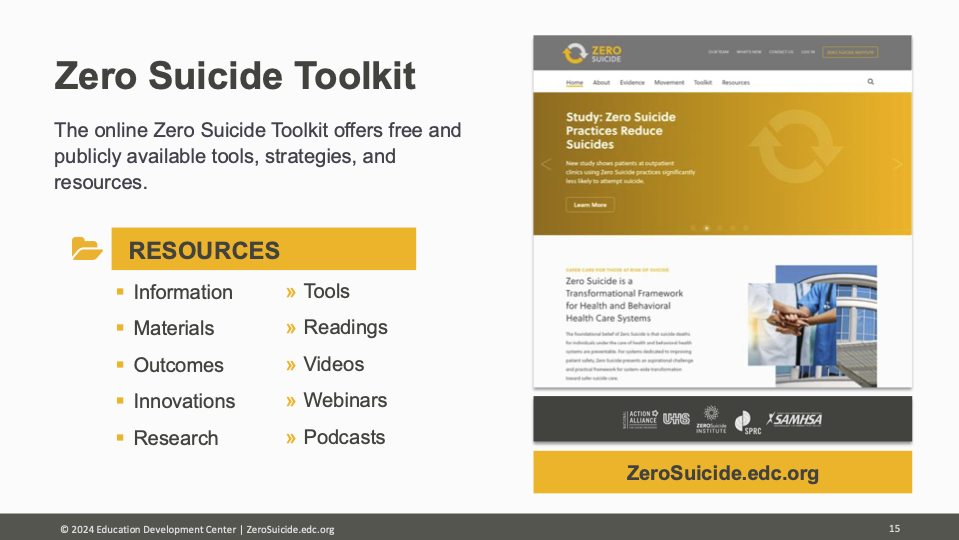
Practitioners interested in moving organizations from intention to infrastructure should explore ZERO Suicide. ZERO Suicide helps health and behavioral health systems create coordinated approaches to suicide prevention through strengthening leadership, training staff, improving policies and procedures, using data for continuous improvement, and embedding evidence-based practices throughout an organization. The framework was developed specifically for suicide prevention, but is relevant to anyone working to create sustainable prevention systems and cultures of safety.
The Means Matter Campaign was developed by the Harvard T.H. Chan School of Public Health and aims to help communities keep people safe by reducing a suicidal person’s access to lethal means. Their website includes research, training resources, and guidance for families, communities, clinicians, and colleges to incorporate lethal means safety into comprehensive suicide prevention efforts.
What suicide prevention resources would you add to the playlist?